
Forklifts drive straight into the lane, so there is no aisle between rows. The highest storage density available without automation.
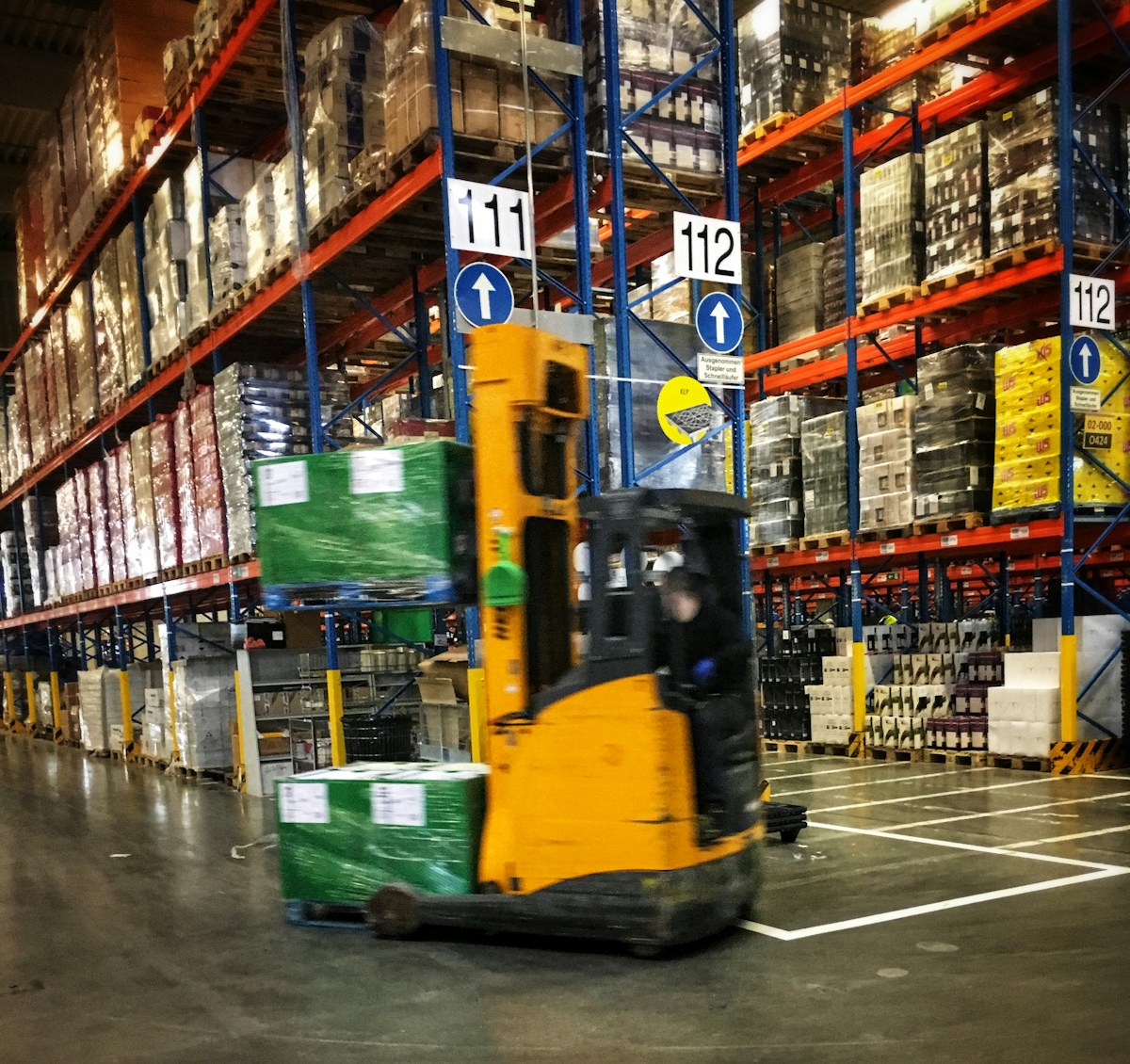
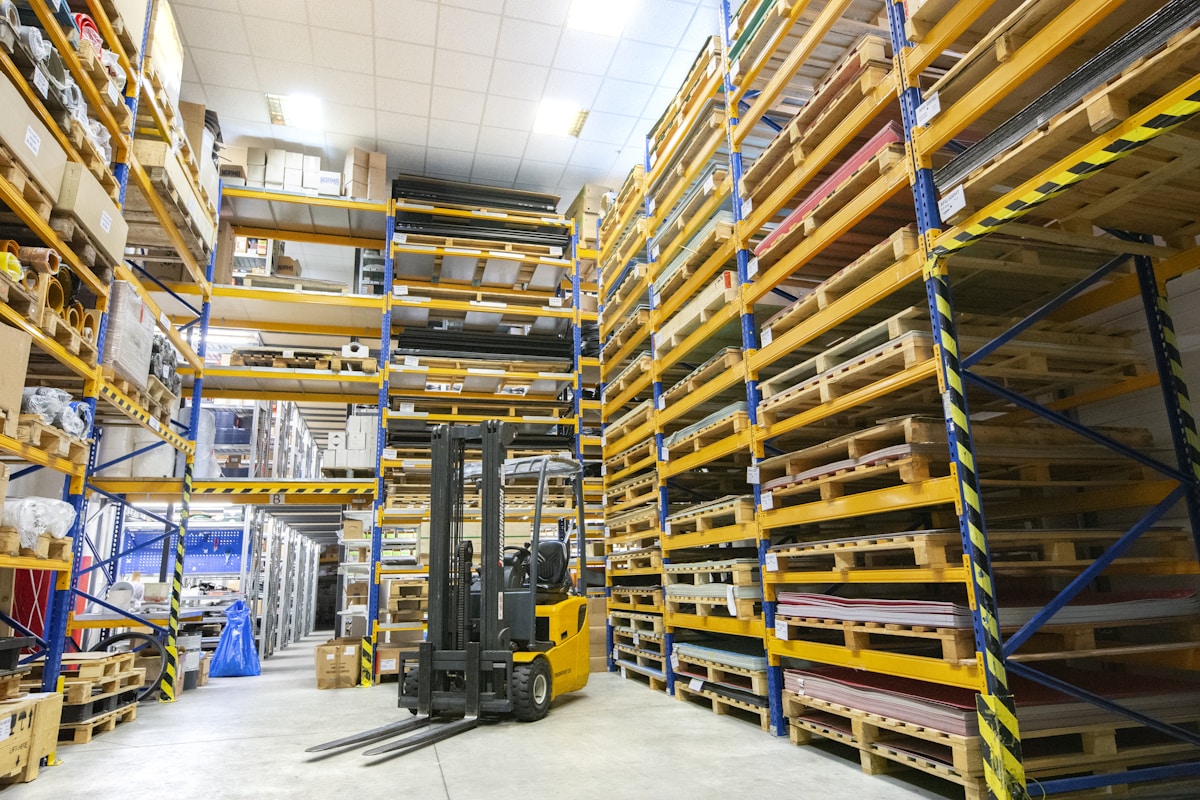
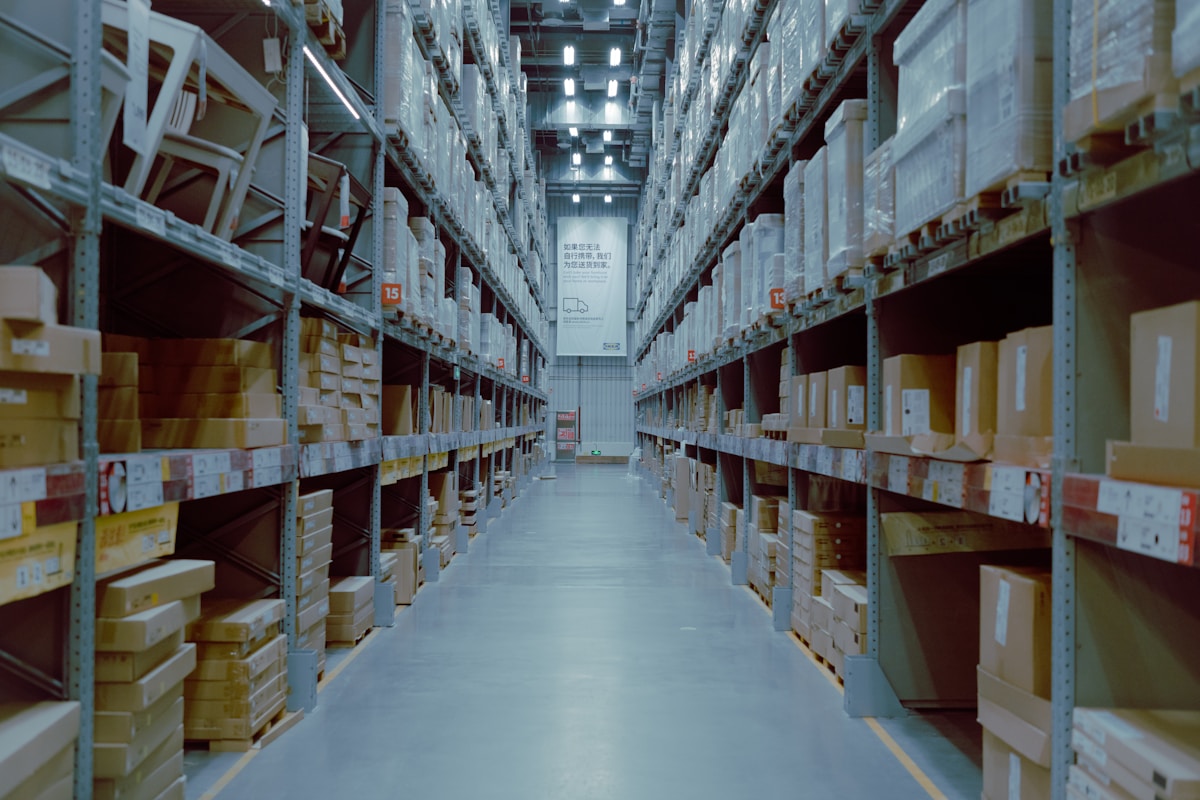
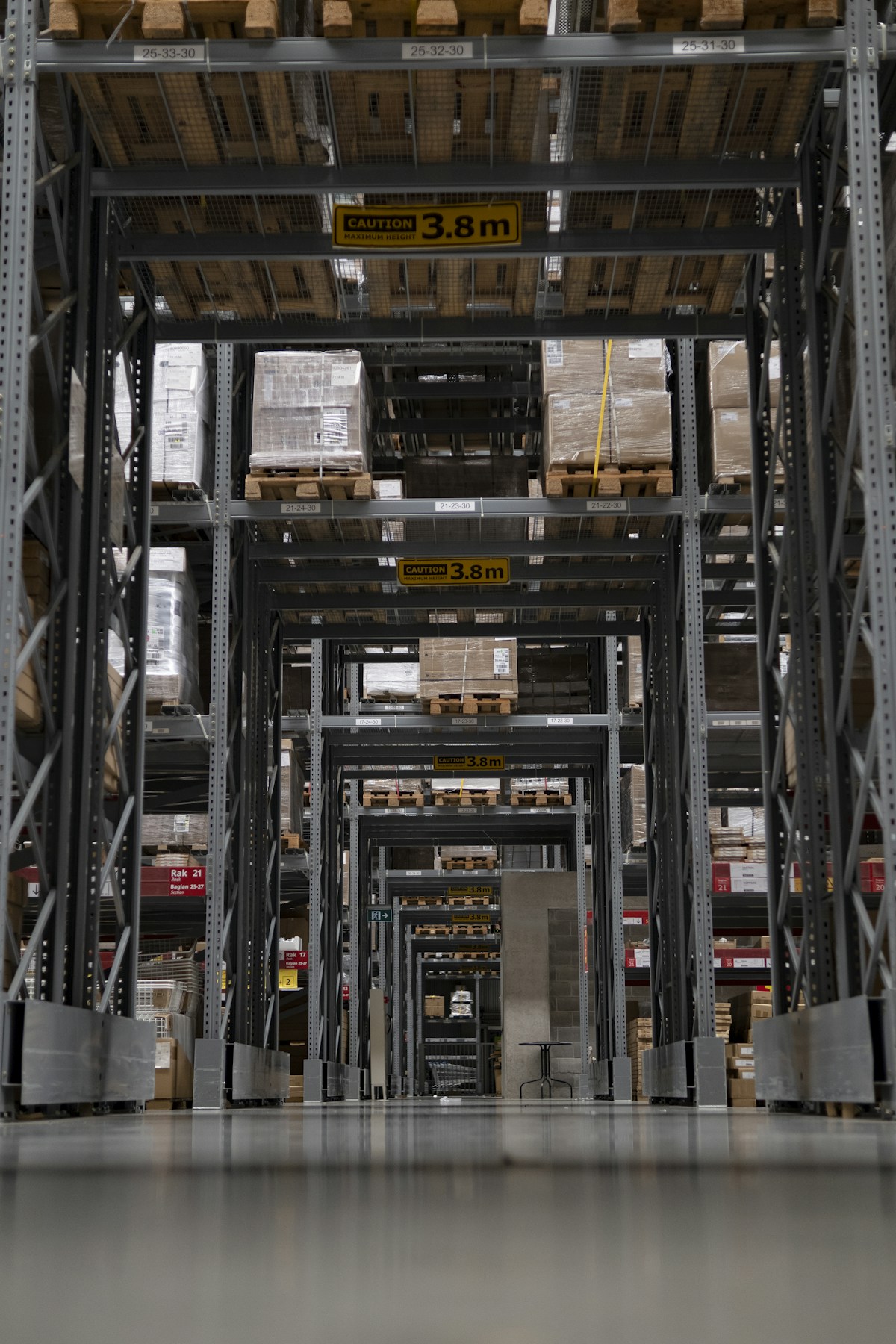
A drive-in racking system is a high-density pallet storage structure where the forklift drives into the lanes to load and unload, so no aisle sits between rows.
If you hold large quantities of a small number of products, drive-in will fit far more into the same building than anything else that uses a standard forklift.
Drive-in removes the aisle between rows entirely. Instead of picking from the face of a shelf, the forklift drives into a lane between two rail-guided frames and sets the pallet onto cantilevered arms, several positions deep.
The trade is access. You can only reach the pallet nearest the aisle, and the lane empties in reverse order, so it works last in, first out. That suits bulk product far better than dated stock.
Frames are roll-formed for standard loads, with structural guide rails and column guards at the lane entry where forklifts actually make contact. Every system is engineered to your loads and signed off on site before you load it.
In a drive-in system, pallets go in and come out of the same end of the lane, so the last pallet loaded is the first one out. It suits bulk stock that does not need strict date rotation.
A drive-through layout is open at both ends. Pallets load from one aisle and unload from the opposite aisle, which gives first in, first out rotation. It needs an aisle at each end of the rack.
Choose drive-in when stock is not dated. If product has to rotate by date, drive-through or another system, such as pallet flow, may fit better.
Every aisle in a cold room is chilled floor area. Removing the aisles lets more pallets fit in the same refrigerated space, which is why drive-in racking is common in cold storage and freezers.
Seasonal bulk product sits in deep lanes of one SKU, and the full clear height is used instead of being lost to aisles.
Where product arrives and leaves in full lanes, drive-in keeps handling simple: one SKU per lane and one entry point.
Every drive-in system is built to the building and the pallet. These are typical ranges, not fixed limits.
| Specification | Typical Range |
|---|---|
| Pallet Access | Front of lane only, last in is first out |
| Storage Density | High. Commonly 60 to 75 percent more than selective |
| Lane Depth | Usually 3 to 8 pallets deep, up to 10 in some layouts |
| Stock Rotation | LIFO only. Not suited to dated or expiring product |
| Upright Height | Commonly 12 to 35 ft, limited by clear height and sprinklers |
| Forklift Type | Reach truck or purpose-built drive-in forklift |
| Rail Protection | Floor guide rails and entry column guards as standard |
| Steel Type | Roll-formed frames, structural rails at contact points |
| Best Suited To | Few SKUs, high volume per SKU, cold storage, seasonal bulk |
Lanes are usually 3 to 8 pallets deep, up to 10 in some layouts. The limit is usually the operator, not the steel: the further a driver reverses into a lane, the slower and riskier it gets.
Uprights commonly run 12 to 35 ft, limited by your clear height and sprinkler clearance.
Figures are typical, not a specification. We confirm lane depth, clearances and rail positions against your pallet counts during the free site assessment.