Two to six pallets deep from a single aisle. Your forklift never leaves the aisle, and gravity brings the next pallet forward.
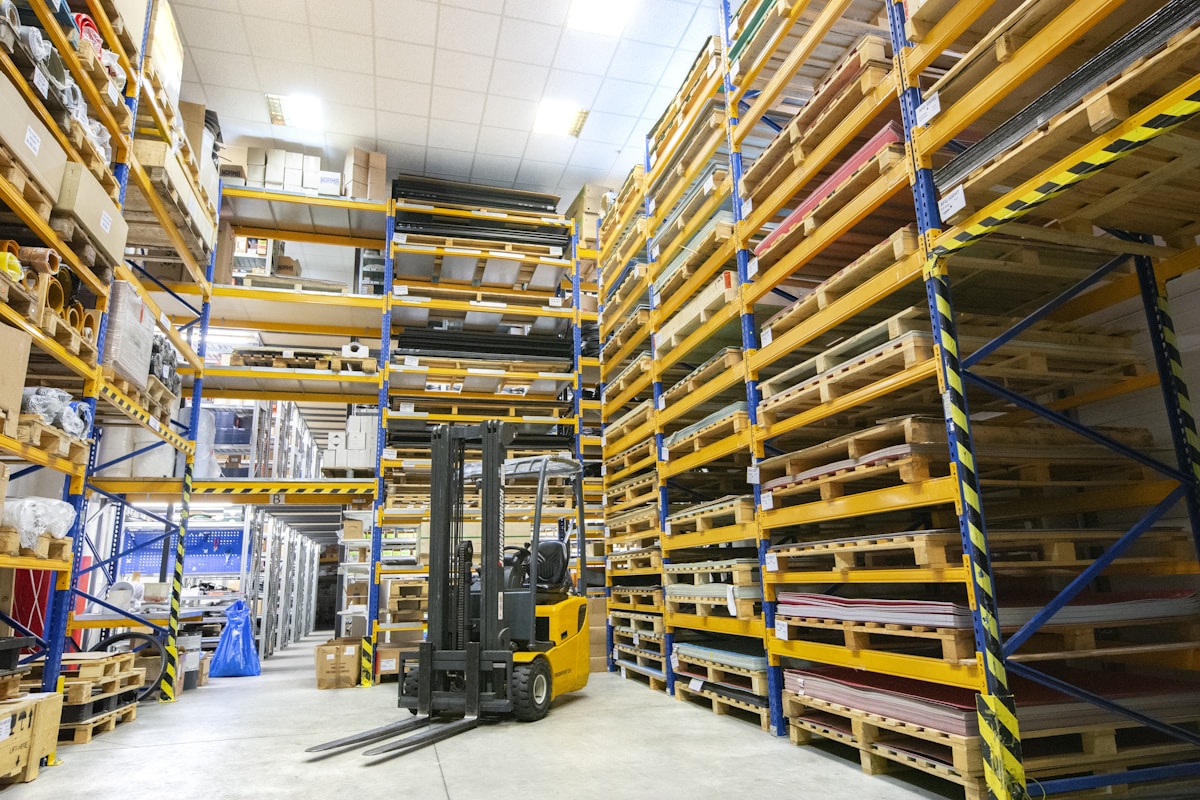
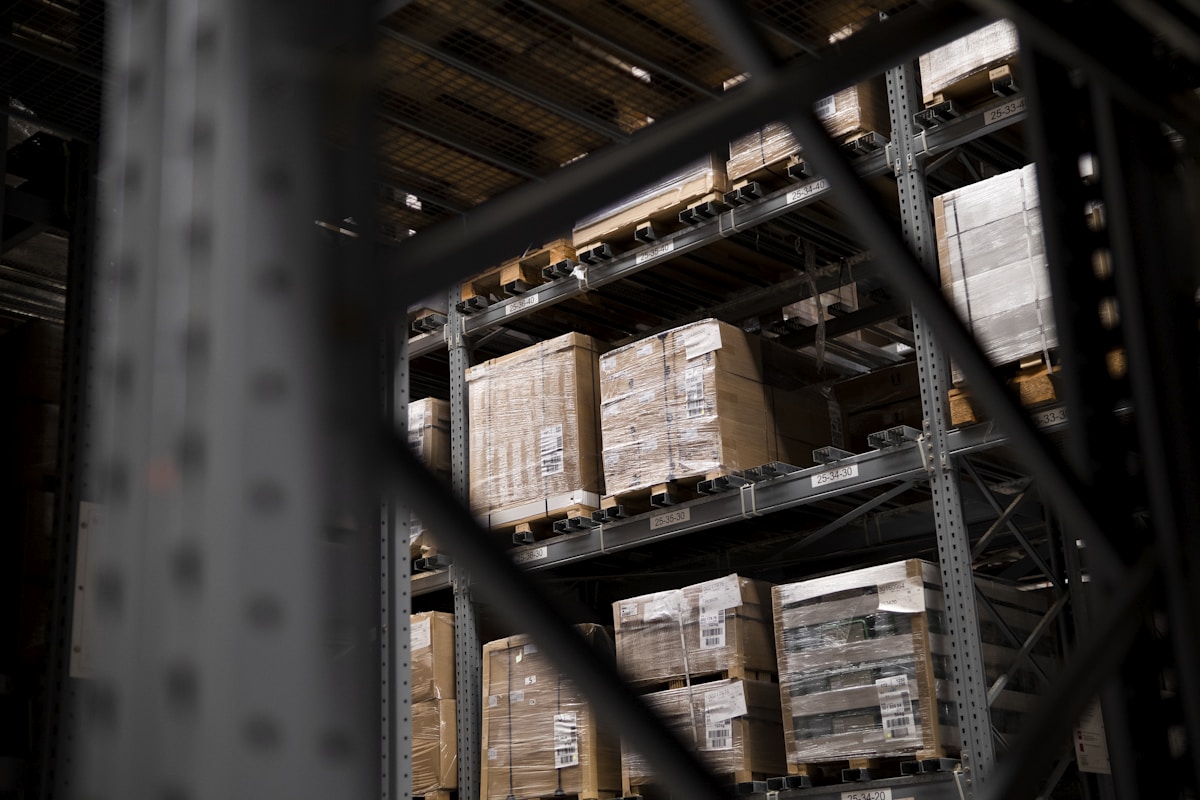
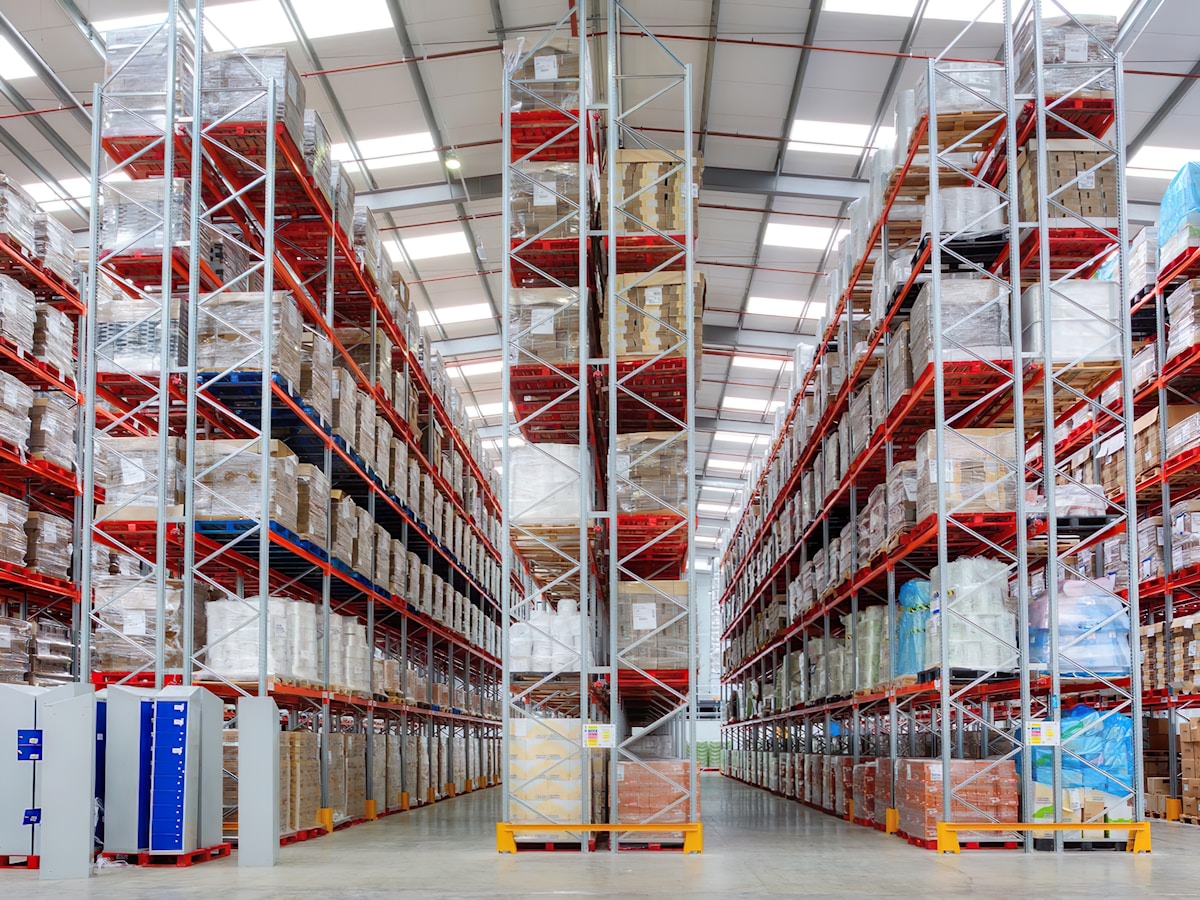
Push back is the middle ground. Close to drive-in on density, close to selective on speed, and the forklift never leaves the aisle.
Instead of fixed beams, each lane holds a set of nested carts running on rails that slope gently down toward the aisle. Loading a pallet pushes the one in front of it back up the slope. Remove the front pallet and gravity rolls the next one down to the face.
Because every level is loaded from the same aisle, each level can hold a different SKU. That gives you far more selectivity than drive-in at similar depth, and cycle times closer to selective because the truck never has to reverse into a lane.
The trade is cost and maintenance. Carts and rails are a mechanical system, so it costs more per position than static racking and the rollers need checking periodically. Every system is engineered to your loads and signed off on site before you load it.
Cart and rail assemblies are built to the pallet weight and depth. These are typical ranges, not fixed limits.
| Specification | Typical Range |
|---|---|
| Pallet Access | Front of lane, next pallet rolls forward automatically |
| Storage Density | High. Typically 60 to 90 percent more than selective |
| Lane Depth | 2 to 6 pallets deep, 4 being the most common |
| Stock Rotation | LIFO. Each level can hold a different SKU |
| Cart System | Nested rolling carts on rails inclined toward the aisle |
| Forklift Type | Standard counterbalance or reach truck, stays in the aisle |
| Maintenance | Periodic inspection of rollers, carts and rail alignment |
| Cost | Higher per position than selective, lower cycle time than drive-in |
| Best Suited To | Medium SKU count, several pallets per SKU, high throughput |
Figures are typical, not a specification. Cart capacity is matched to your heaviest pallet, so we confirm weights on site before quoting.