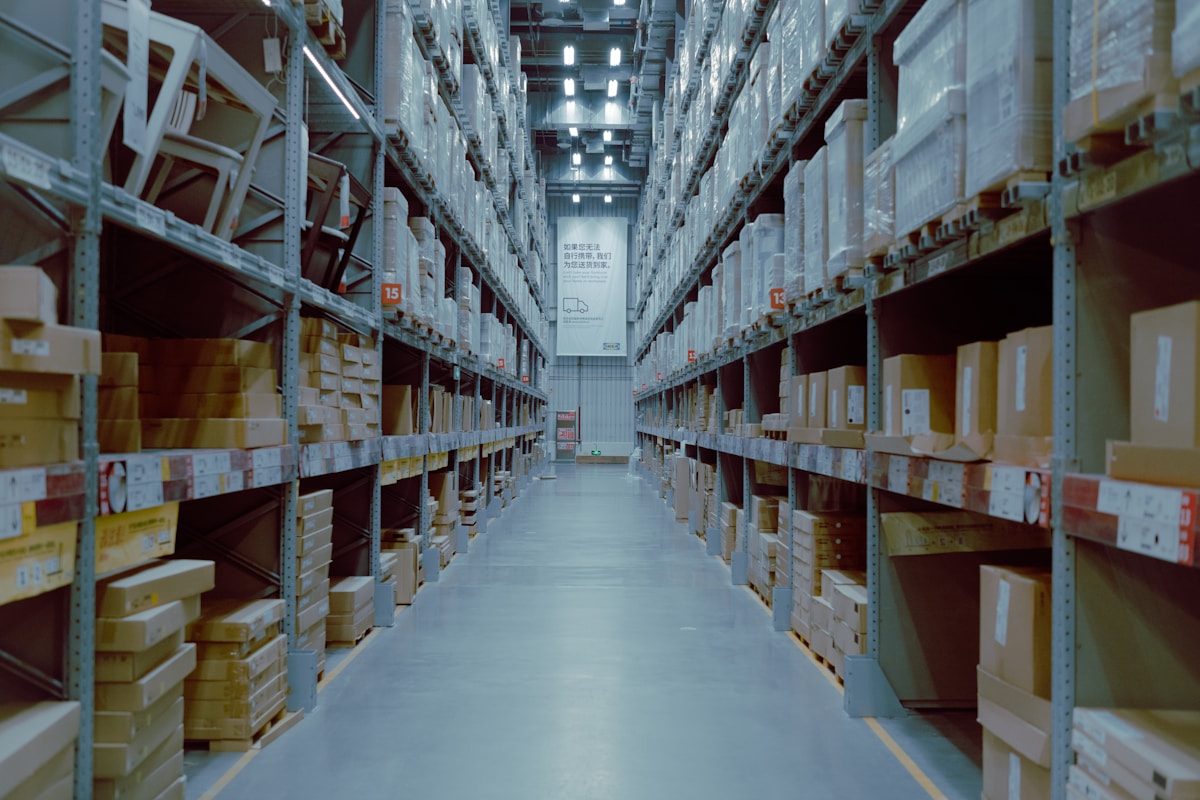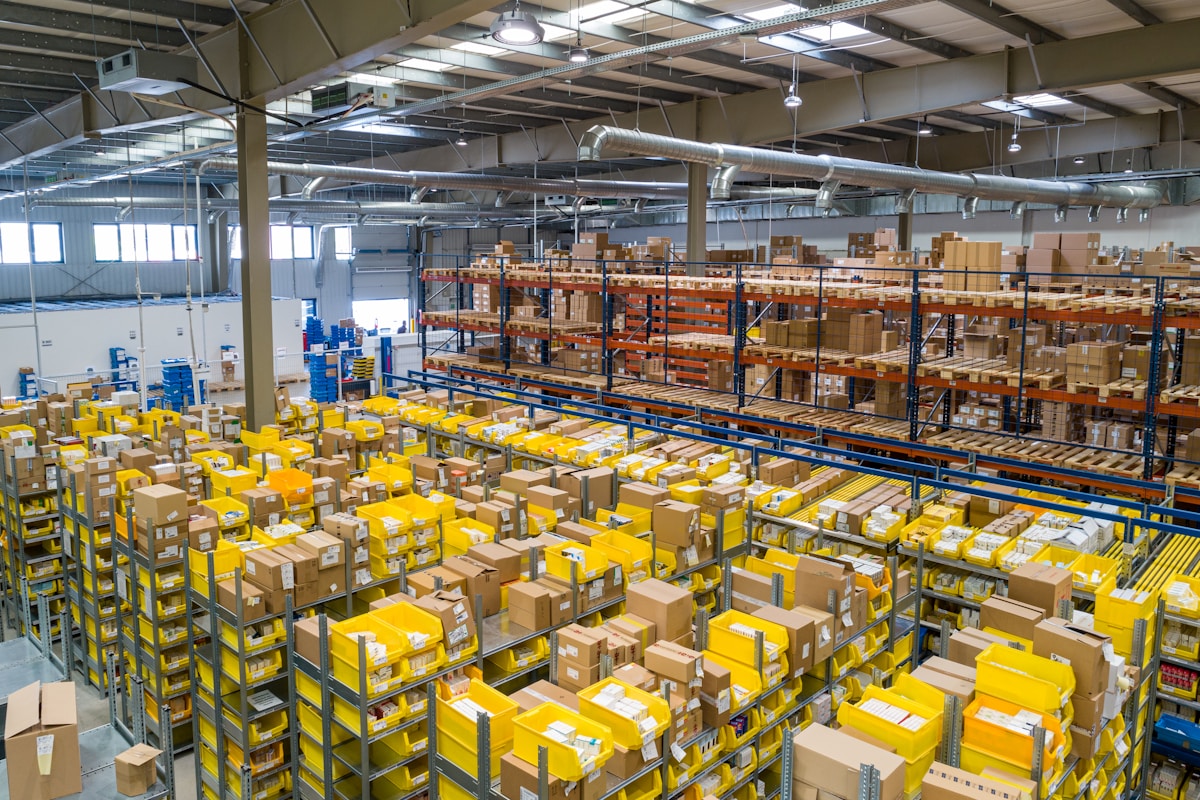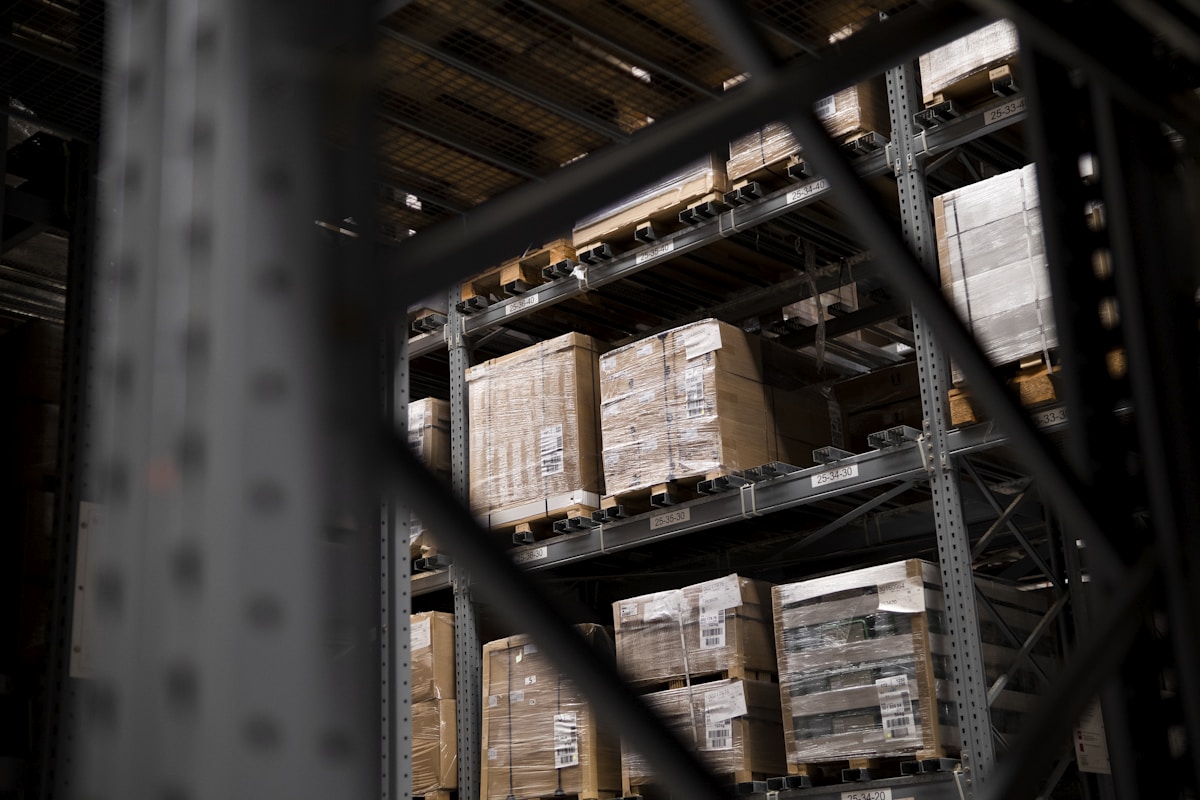
A multi-level picking structure built inside your building. Several systems working together to move high order volumes through a small footprint.
A pick module is not a racking type you order off a shelf. It is a structure that combines several systems into one, designed around how your orders actually flow.
Typically it stacks two to four working levels inside the clear height you already have. Carton flow forms the pick face for fast movers, pallet flow or selective sits behind and above holding reserve stock, and elevated walkways let pickers work every level.
The gain is not just storage, it is travel. Instead of walking a picker across the building for each line, the SKUs come to a compact face and the picked order drops to conveyor or a takeaway lane at ground level. On high volume operations that is usually where the payback sits.
Because people work at height on it, this is the most heavily engineered system we build. Elevated walkways, guardrails, stairs and egress routes, fire protection under the decks and usually a building permit all form part of the design rather than being added afterwards.
Every pick module is designed around your order profile and building. These are typical ranges, not a product spec.
| Specification | Typical Range |
|---|---|
| What It Is | A multi-level structure combining several storage systems |
| Working Levels | Commonly 2 to 4, set by your clear height |
| Pick Face | Usually carton flow, sometimes shelving or pallet flow |
| Reserve Storage | Pallet flow, selective or push back above and behind the face |
| Order Takeaway | Conveyor, chute or manual takeaway to ground level |
| Access | Elevated walkways, stairs, guardrails and gates |
| Approvals | Engineer-stamped drawings, usually a building permit, PSR |
| Fire Protection | In-rack or under-deck sprinklers, subject to review |
| Best Suited To | E-commerce, 3PL, food service, high line-count order picking |
Figures are typical, not a specification. A pick module starts with your order data, not a catalogue, so bring line counts and SKU velocity to the assessment.
A pick module is the biggest thing we build. Most operations that ask about one are better served by a simpler system first, and we will tell you if that is you.
This is where the labour saving justifies a serious structure.
Sounds like your operation? Book a free site assessment and bring your order line counts, not just your pallet numbers.
This is the largest investment on the site. It should not be the first thing you try.
Try carton flow on a single level first, a mezzanine for simpler added floor, or pallet flow for pallet throughput.
A mezzanine adds floor space. A pick module is a picking operation built in three dimensions. It carries storage systems on every level, feeds a pick face, and moves completed orders out, all as one designed structure. A mezzanine is simpler, cheaper and more flexible. If what you actually need is more floor, buy a mezzanine.
In almost all cases, yes. Elevated working levels bring in structural review, guardrails, stair and egress requirements and fire protection under the decks. We handle the engineer-stamped drawings and the permit application as part of the project, and a Pre-Start Health and Safety Review is normally required before it goes into service.
Longer than any other system here, mostly because of approvals rather than steel. Design and order data analysis come first, then drawings, then permit, then installation phased around your operation. If you need capacity live within a few weeks, this is not the right answer.
It depends entirely on your order profile. A common build puts carton flow at the ground pick face for fast movers, pallet flow or selective directly above holding reserve for those same SKUs, and slower moving lines on the upper walkway levels. The design starts from your line counts and SKU velocity, not from a layout template.
Usually, if it is planned that way from the start. Extending an approved elevated structure means revisiting the engineering and often the permit, so it is far cheaper to design in the future bays now than to bolt them on in two years.
The systems that make up a pick module, or replace the need for one.