Post guards, guardrails, wire mesh decking and safety bars. The cheapest insurance in the building, and the item most often left off the order.
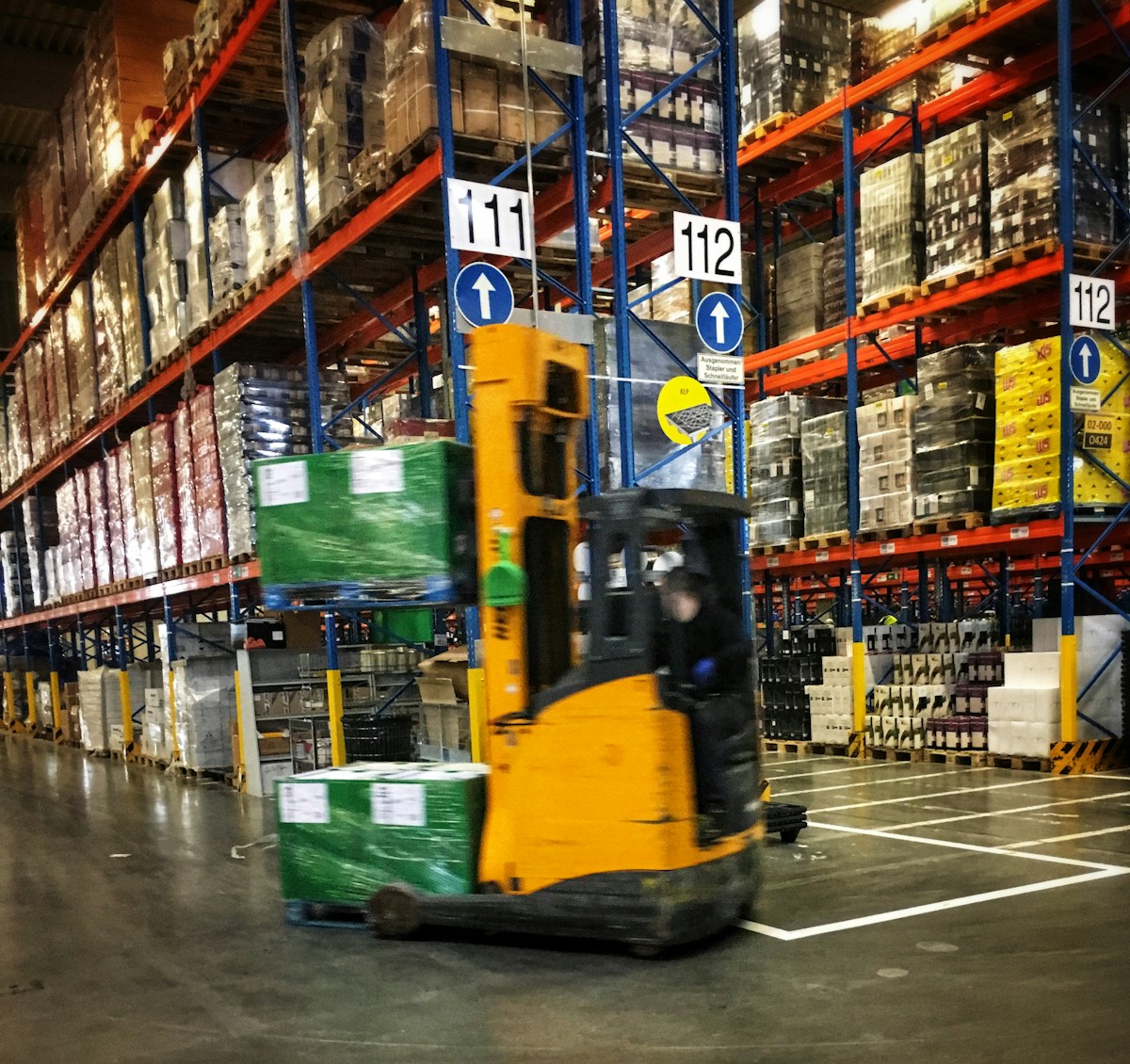
Forklifts hit racking. Not occasionally, routinely. The only real question is whether the frame or a guard takes the impact.
A struck upright does not fail politely. Even a small deflection reduces the rated capacity of that frame, and because the frame carries every beam above it, the whole run is affected. Most people find out when an inspection flags it, not when it happens.
Protection comes in layers. Column guards bolt to the floor and absorb direct strikes on the upright. End-of-aisle barriers take the wider hits where trucks turn in. Guardrails keep traffic away from the structure entirely. Inside the bay, safety bars and wire mesh decking stop pallets and loose cartons dropping through onto whoever is underneath.
None of it is expensive relative to what it protects. A column guard costs a small fraction of the upright behind it, and far less than clearing a bay, replacing a frame and re-certifying a run while that aisle sits out of service.
Protection is specified around your traffic patterns and equipment. These are the common components, not a fixed list.
| Specification | Typical Range |
|---|---|
| Column Guards | Bolt to the floor in front of uprights. First line of defence |
| End of Aisle Barriers | Protect the exposed frames where trucks turn in |
| Guardrail | Keeps traffic away from the structure entirely |
| Bollards | Protect dock areas, columns, doors and equipment |
| Wire Mesh Decking | Stops cartons and part-pallets falling through the bay |
| Pallet Support Bars | Carry undersized or damaged pallets across the beams |
| Safety Netting | Backing to stop product being pushed into the next aisle |
| Fitted To | New installs and existing racking alike |
| Most Needed At | Aisle ends, drive-in lane entries, dock doors, tight corners |
Protection is specified from your traffic, not from a catalogue. We walk the floor and look for the paint marks and scuffs that show where impacts are already happening.
This is the one item on the site where we will happily tell you to buy more of it. It is cheap, it retrofits, and the alternative is replacing frames.
Honestly, most warehouses tick at least two of these.
Seen marks on your uprights? Book a free site assessment and we will show you where the impacts are already happening.
Protection stops future damage. It does nothing about damage already done.
If frames are already struck, start with inspection and repair. If you are moving, see relocation and teardown.
Usually yes. Racking is designed on the assumption that uprights are straight. Even a modest deflection reduces the rated capacity of that frame, and because the frame carries every beam above it, the whole column of load is affected. A frame that looks fine can be well below its rating. If you have visible damage, have it assessed rather than judged by eye.
Yes, and that is most of what we do. Column guards, end barriers, guardrail, decking and support bars all retrofit to existing systems. It is one of the few upgrades you can make without touching the racking itself or interrupting the operation for long.
Aisle ends and drive-in lane entries. Those are where trucks turn and where the frames are most exposed, and they account for most impacts we see. After that, anywhere people work or walk beneath loaded racking, since that is a safety exposure rather than just a repair cost.
It stops things falling through the bay. Beams support pallets at two points, so anything smaller than a full pallet, or a pallet with broken boards, can drop through onto whatever is below. Mesh decking closes the gap and lets sprinkler water through, which is why it is generally preferred to solid decking.
Protection itself is not mandated the way capacity signage is, but your obligation to keep the workplace safe is. In practice, if racking in a traffic area has no protection and someone is injured, that is a difficult position to defend. It is also the cheapest way to keep racking within its rated condition between inspections.
What to look at next, whether the damage is done or you are preventing it.