Cases roll forward to the pick face as stock is taken. Built to cut walking time and keep every SKU in front of the picker.
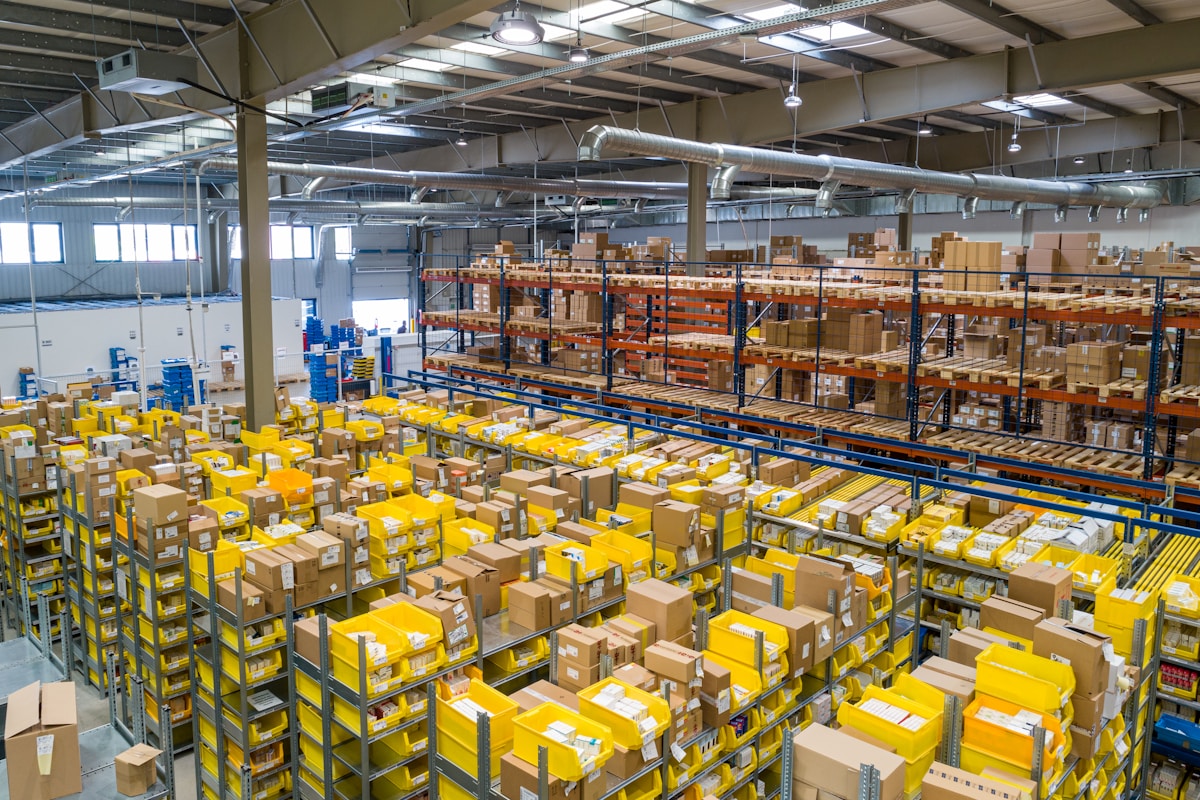
In most case-picking operations the biggest cost is not storage. It is the distance your team covers to assemble an order.
Carton flow packs many SKUs into a short run of pick face. Each lane is a bed of wheels or rollers on a gentle decline, holding cases several deep. Take the front case and the next one rolls down to replace it, so the face is never empty and nobody restocks mid-pick.
Like pallet flow, it is loaded from a separate aisle at the back, so replenishment never gets in the way of the pickers and stock rotates first in, first out on its own. The difference is scale: cases picked by hand, not pallets moved by forklift.
Because people work at it all day, the design driver is ergonomics. We set the fastest moving SKUs in the golden zone between knee and shoulder height, and put slow movers above and below. That single decision is usually worth more than any change to the racking itself.
Lane width, wheel type and incline are matched to your case size and weight. These are typical ranges, not fixed limits.
| Specification | Typical Range |
|---|---|
| Handles | Cases, cartons and totes picked by hand |
| Stock Rotation | True FIFO, enforced by the layout |
| Lane Depth | Commonly 4 to 12 cases deep per lane |
| Aisles Required | Two. Restock at the back, pick at the front |
| Bed Type | Skate wheel for light cases, full roller for heavy or soft-bottomed |
| Pick Face Height | Fast movers between knee and shoulder, the golden zone |
| Case Weight | Typically 5 to 50 lb per case, heavier on roller beds |
| Combined Use | Often built under pallet racking or into a pick module |
| Best Suited To | Order fulfilment, food service, e-commerce, parts distribution |
Figures are typical, not a specification. Wheel type and incline depend on your case size, weight and packaging, so bring a sample case to the assessment.
Carton flow is a labour investment more than a storage one. It pays back on pick volume, so the honest question is how many lines your team picks a day.
This is where it pays for itself in labour rather than in storage.
Picking cases all day? Book a free site assessment and bring a sample case so we can size the beds properly.
Carton flow only earns its cost where picking volume is high.
Try industrial shelving for lower volume picking, pallet flow for full pallets, or pick modules to scale it across levels.
Skate wheel beds use rows of small wheels and suit light, firm, flat-bottomed cases. Full roller beds run the width of the lane and handle heavier cases, soft or uneven bottoms, and anything that would tip between wheels. Roller costs more, so we only specify it where the product needs it. This is the main reason we ask for a sample case.
It is the band between roughly knee and shoulder height where a person can pick without bending or stretching. Putting your fastest moving SKUs there and your slow movers above and below usually improves pick rate and reduces strain injuries more than any change to the racking itself. It costs nothing to get right at design stage and is awkward to fix afterwards.
Yes, for it to work properly. Restocking from the back is what keeps replenishment out of the pickers way and what makes the rotation genuinely first in, first out. If you only have room for one aisle, static shelving is usually the more honest answer.
Very commonly. A typical build puts carton flow at the pick face for fast movers, with pallet racking directly above holding the reserve stock for the same SKUs. Replenishment then drops down from the level above rather than travelling across the building.
Periodic checks on wheels, rollers and lane alignment, and keeping the lanes clear of loose packaging. It is mechanical, so it is not fit-and-forget, but it is light work compared with a pallet flow system carrying tonnes.
The systems most often built alongside or instead of carton flow.