Drive-In Racking

Forklifts drive straight into the lane, so there is no aisle between rows. The highest storage density available without automation.
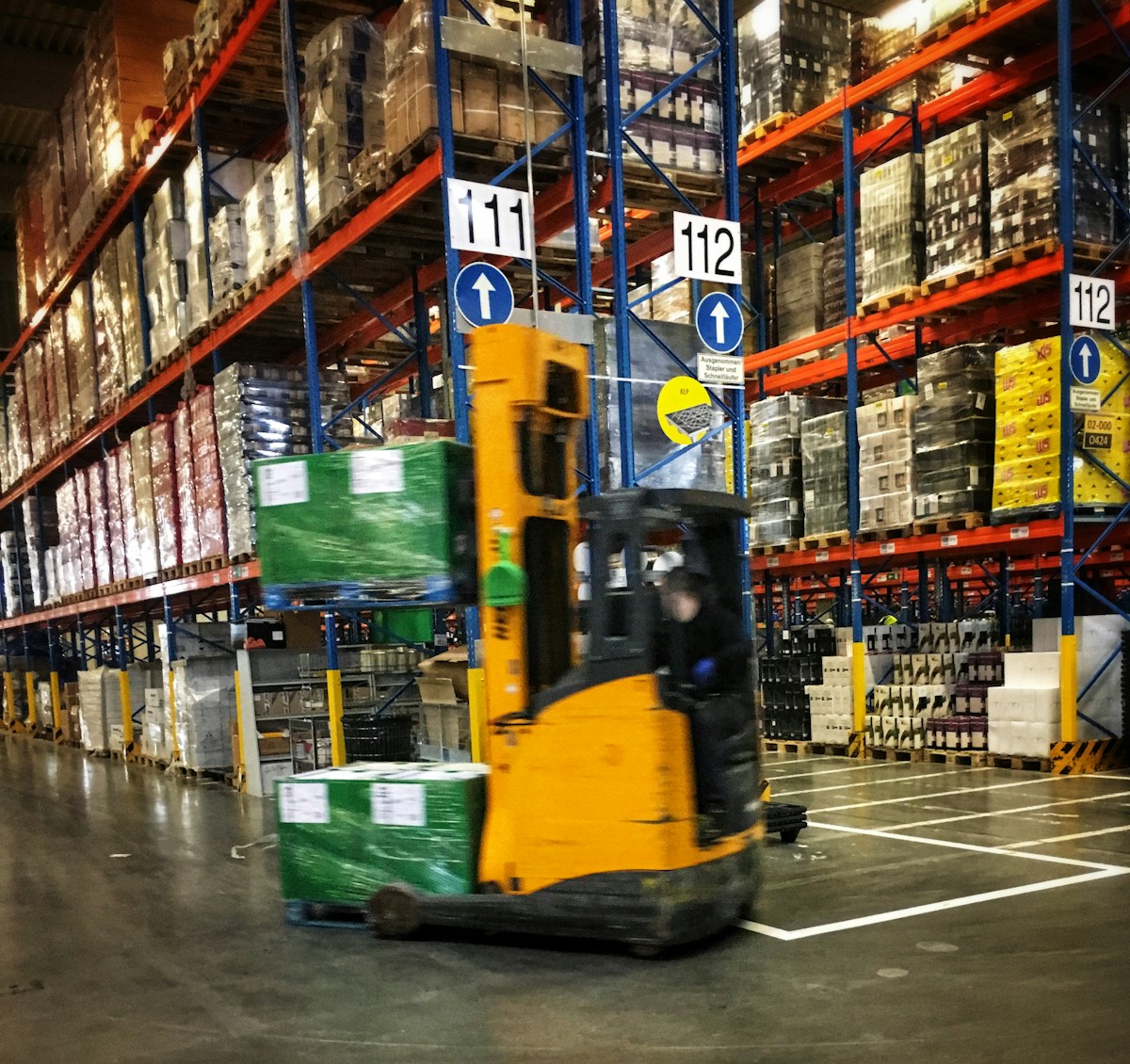
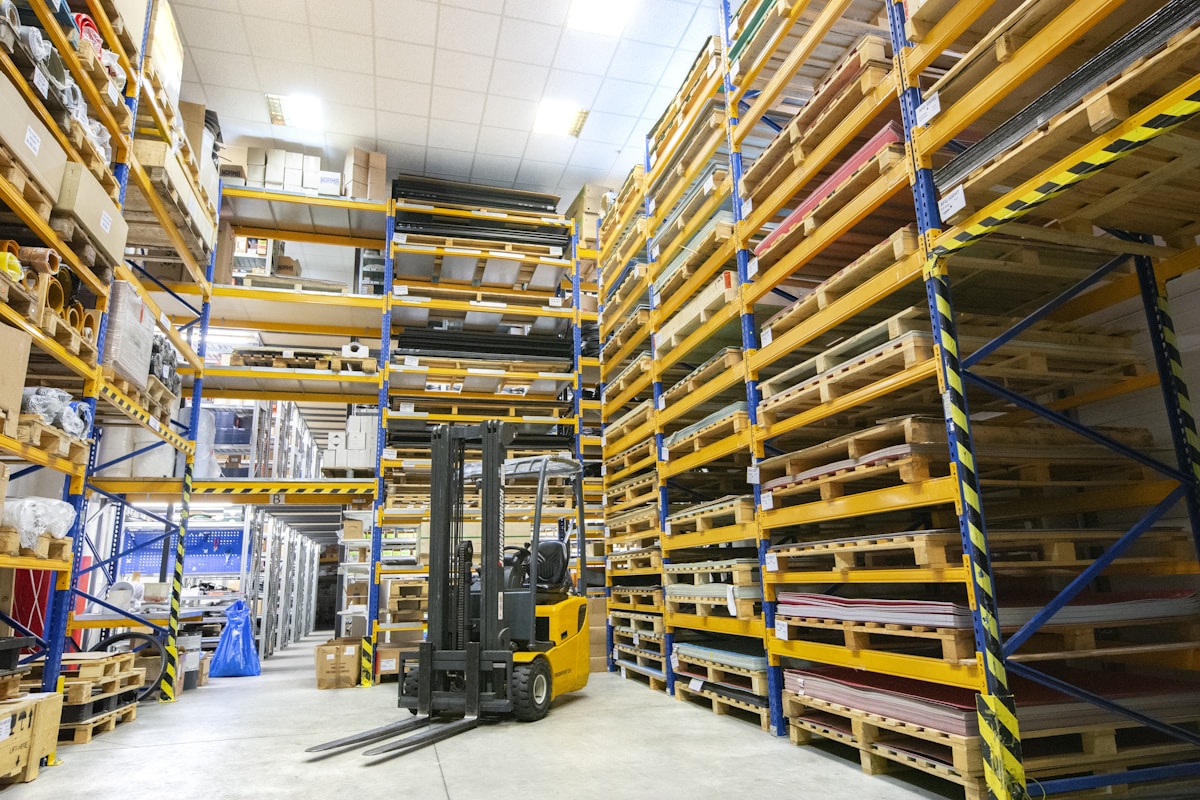
Forklift driving into a drive-in racking lane The forklift drives the full length of the lane. There is no aisle between the rows.
Deep lane pallet storage in a high density warehouse Pallets rest on cantilevered rails, several positions deep on both sides of the lane.
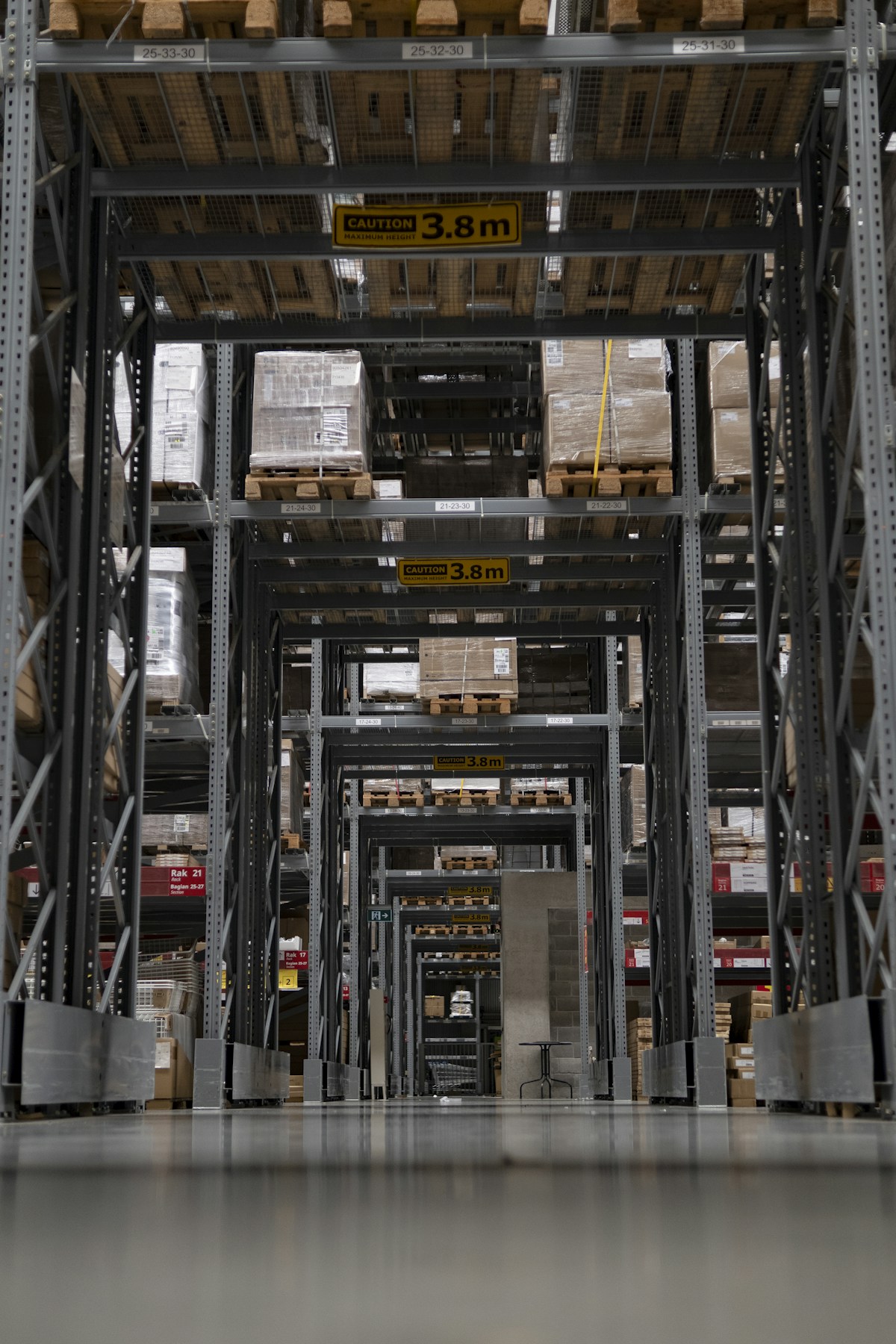
High bay bulk storage using the full clear height Because you are not spending floor on aisles, you can use the full clear height.
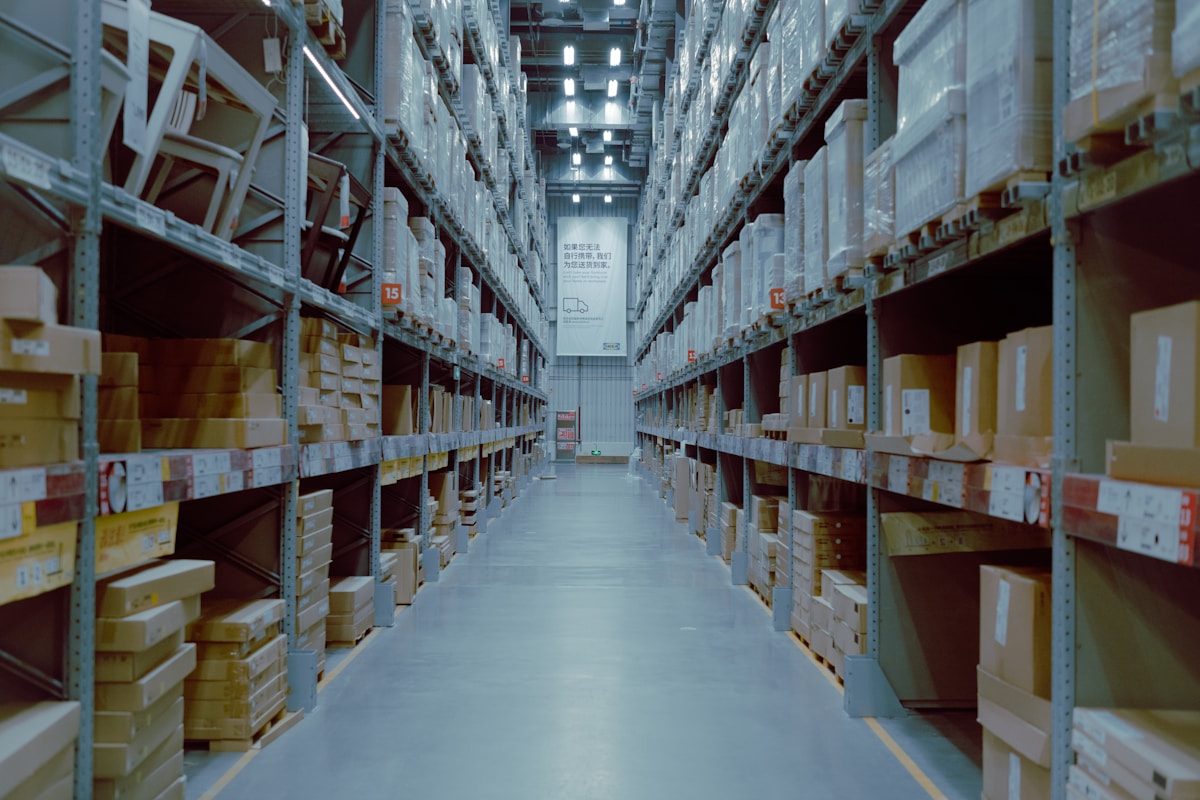
Bulk pallets of identical stock in a distribution warehouse Best suited to few SKUs held in volume, where strict rotation is not required.
What It Is

Density Over Selectivity

If you hold large quantities of a small number of products, drive-in will fit far more into the same building than anything else that uses a standard forklift.

Drive-in removes the aisle between rows entirely. Instead of picking from the face of a shelf, the forklift drives into a lane between two rail-guided frames and sets the pallet onto cantilevered arms, several positions deep.

The trade is access. You can only reach the pallet nearest the aisle, and the lane empties in reverse order, so it works last in, first out. That suits bulk product far better than dated stock.

Frames are roll-formed for standard loads, with structural guide rails and column guards at the lane entry where forklifts actually make contact. Every system is engineered to your loads and signed off on site before you load it.

  • Up to 60 to 75 percent more pallets than selective
  • Lowest cost per position for bulk single-SKU storage
  • Guide rails and column guards at every lane entry
  • Uses the full clear height instead of losing it to aisles
The Numbers

Typical Specifications

Every drive-in system is built to the building and the pallet. These are typical ranges, not fixed limits.

SpecificationTypical Range
Pallet AccessFront of lane only, last in is first out
Storage DensityHigh. Commonly 60 to 75 percent more than selective
Lane DepthUsually 3 to 8 pallets deep, up to 10 in some layouts
Stock RotationLIFO only. Not suited to dated or expiring product
Upright HeightCommonly 12 to 35 ft, limited by clear height and sprinklers
Forklift TypeReach truck or purpose-built drive-in forklift
Rail ProtectionFloor guide rails and entry column guards as standard
Steel TypeRoll-formed frames, structural rails at contact points
Best Suited ToFew SKUs, high volume per SKU, cold storage, seasonal bulk

Figures are typical, not a specification. We confirm lane depth, clearances and rail positions against your pallet counts during the free site assessment.

Honest Assessment

Is Drive-In Right for You?

Drive-in is the densest system we supply, but it is unforgiving if your stock does not suit it. If your operation looks like the right column, we will say so.

Choose Drive-In If

These are the conditions where nothing stores more per square foot.

  • You store large volumes of a small number of SKUs
  • Floor space is your binding constraint, not access speed
  • Stock does not need to rotate in strict date order
  • You run cold storage, where aisle space is expensive to chill
  • Product arrives and leaves in full lanes rather than single pallets

Most Ontario warehouses land here. Book a free site assessment and we will confirm it against your pallet counts.

Look Elsewhere If

In these cases drive-in will cost you more in wasted positions than it saves in floor.

  • You carry many different SKUs and pick from most of them daily
  • Stock is dated and must move first in, first out
  • Lanes would often sit part empty, wasting the positions behind
  • Your operators are not trained to drive inside a rack structure
  • You store long or oversized loads that will not sit on rails

Try push back, double deep, pallet flow or selective instead.

Straight Answers

Drive-In Racking FAQ

What does "honeycombing" mean, and why does it matter?

It is what happens when a lane is only part full. Because you load and unload from one end, any gap created partway down a lane is unusable until the whole lane is cleared and restocked. It is the single biggest reason drive-in underperforms in practice, and it is why we ask about your SKU count and order patterns before recommending it.

How deep can a lane be built?

Typically 3 to 8 pallets, occasionally more. The limit is usually the operator, not the steel. The further into a lane a driver has to reverse with pallets either side, the slower and riskier it gets, so there is a point where extra depth stops paying for itself.

What forklift do I need?

A reach truck sized to your lane width and load height, or a purpose-built drive-in truck for deeper or narrower runs. Standard counterbalance forklifts are usually too wide. We check what you already run before we set the lane dimensions.

Is drive-in or push back the better choice?

Drive-in stores more per lane, but the forklift enters the structure, which means more impact damage over time. Push back keeps the truck in the aisle and nests pallets on carts instead, which is faster to load and gentler on the racking, at slightly lower density. If you are weighing the two, give us your pallet counts and we will size both.

How much damage should I expect?

More than with selective, honestly. Forklifts operating inside a rack structure will make contact. That is why guide rails and entry column guards are standard rather than optional, and why we recommend a scheduled inspection rather than waiting for something to look wrong.

Get Drive-In Racking Priced Free site assessment. We measure the building, then send a layout and real numbers.